
The Automotive Lighting Industry: Trends, Technologies, and the Future of LED Solutions
The automotive lighting sector is undergoing one of the most profound transformations in its century-long history. What was once a simple functional necessity—providing basic illumination for night driving—has evolved into a sophisticated ecosystem of safety systems, design statements, and intelligent technologies. The global automotive lighting market, valued at over USD 30 billion in 2024, is projected to grow at a compound annual growth rate (CAGR) of 6–8% over the next decade, driven by electric vehicle adoption, autonomous driving developments, and consumer demand for enhanced aesthetics and safety.
This industry-wide shift presents both challenges and opportunities for manufacturers, suppliers, and end-users. From halogen and HID to LED and laser technologies, lighting systems have become more efficient, durable, and intelligent. At the heart of this revolution is the LED—a solid-state light source that has redefined expectations for brightness, longevity, and design flexibility. For aftermarket suppliers, fleet operators, and individual vehicle owners, understanding these trends is essential to making informed decisions about lighting upgrades and replacements.
In this comprehensive industry overview, we explore the key drivers shaping automotive lighting, the diverse applications across vehicle types, and how a reliable factory-direct partner can deliver high-performance solutions for every need.
1. Market Dynamics: Why the Industry Is Booming
Several converging factors are fuelling the rapid expansion of the automotive lighting market:
-
Electric and Hybrid Vehicle Proliferation: EVs require energy-efficient lighting to maximise battery range. LED and OLED technologies consume 70–80% less power than conventional halogen bulbs, making them the natural choice for next-generation vehicles.
-
Stringent Safety Regulations: Governments worldwide are mandating brighter, more responsive lighting. For example, the European Union's General Safety Regulation requires advanced emergency braking and lane-keeping systems, which rely on highly visible lighting. In the US, NHTSA has updated FMVSS 108 to allow adaptive driving beam (ADB) headlights, further boosting demand for intelligent lighting.
-
Consumer Preference for Customisation: Today's car buyers view lighting as a key design element. Signature DRL patterns, animated turn signals, and ambient interior lighting are no longer reserved for luxury brands—they are expected across all segments.
-
Growth of Off-Road and Adventure Activities: The surge in overlanding, camping, and off-road recreation has created a robust aftermarket for auxiliary driving lights, light bars, and work lights.
-
Commercial Fleet Modernisation: Logistics companies are upgrading truck and trailer lighting to LED for improved visibility, lower maintenance costs, and reduced downtime.
These trends underscore the need for versatile, high-quality lighting solutions that cater to passenger cars, commercial trucks, motorcycles, and industrial equipment alike.
2. The Technology Landscape: From Halogen to Smart Lighting
Understanding the technological progression helps contextualise the value of modern LED systems.
Halogen – The Outgoing Standard
Halogen bulbs have been the workhorse of automotive lighting for decades. They are inexpensive and simple, but suffer from short lifespans (300–500 hours), high heat output, and relatively low luminous efficacy (around 20 lumens per watt).
HID (Xenon) – The Bright Intermediary
High-Intensity Discharge lamps offer significantly more light (up to 3,000 lumens) and better colour rendering than halogens. However, they require ballasts, take time to warm up, and contain hazardous mercury, making disposal problematic.
LED – The Dominant Force
Light-Emitting Diodes have revolutionised automotive lighting. They offer:
-
Efficacy: Up to 150 lumens per watt
-
Lifespan: 30,000–50,000 hours
-
Instant On: Full brightness in milliseconds
-
Design Freedom: Tiny form factors allow for ultra-slim headlights and intricate light guides
-
Colour Options: From warm amber (2700K) to cool white (6500K) and RGB for accent lighting
Laser and OLED – The Next Frontier
Laser headlights (already featured in some premium models) deliver unprecedented range (up to 600 metres) in compact packages. OLEDs enable ultra-thin, uniform rear lamps with dynamic animations. While still niche, these technologies signal the direction of future innovation.
For the vast majority of aftermarket and OEM applications, LED remains the most cost-effective and versatile upgrade path.
3. Product Categories: Lighting for Every Vehicle and Purpose
A comprehensive lighting manufacturer must address the entire spectrum of vehicle types and use cases. Our product portfolio covers each of these critical segments:
Passenger Car Lighting
-
LED Headlights: Replacement bulbs (H4, H7, H11, 9005, 9006, and D-series) and complete assemblies with projector or reflector optics. Key features include CANBUS compatibility, anti-flicker drivers, and 1:1 beam pattern for proper cutoff.
-
Fog Lights: Dual-colour (white/amber) options that cut through fog, rain, and snow without causing glare.
-
Tail and Brake Lights: High-intensity LED arrays with sequential turn signals for enhanced safety and style.
-
Interior and Ambient Light Strips: Flexible, adhesive-backed LED strips for footwells, dashboards, and door panels; available in single-colour and RGB versions.
-
Daytime Running Lights (DRL): Slim, bright modules that improve daytime visibility and give vehicles a distinctive look.
Driving Lights and Auxiliary Lamps
-
Driving Lights: Long-range spot and combo beams for highway and rural road use. Typically mounted on grilles or bull bars, they supplement high beams for extended visibility.
-
Work Lights: Rugged, wide-flood lights for job sites, workshops, and off-road campsites. IP67/IP68 waterproof and vibration-resistant.
-
Light Bars: Single-row and double-row bars delivering up to 18,000 lumens of combined spot/flood output for off-road and commercial vehicles.
Truck and Heavy-Duty Lighting
-
Truck Headlights and Marker Lights: Heavy-duty housings designed for commercial vehicles, with polycarbonate lenses and stainless steel brackets.
-
Trailer Lights: Full sets including stop/turn/tail (STT) lights, clearance lights, and side marker lights, all LED for maximum reliability.
-
Cargo and Loading Lights: High-output work lights for trailers, cargo areas, and loading docks.
Motorcycle Lighting
-
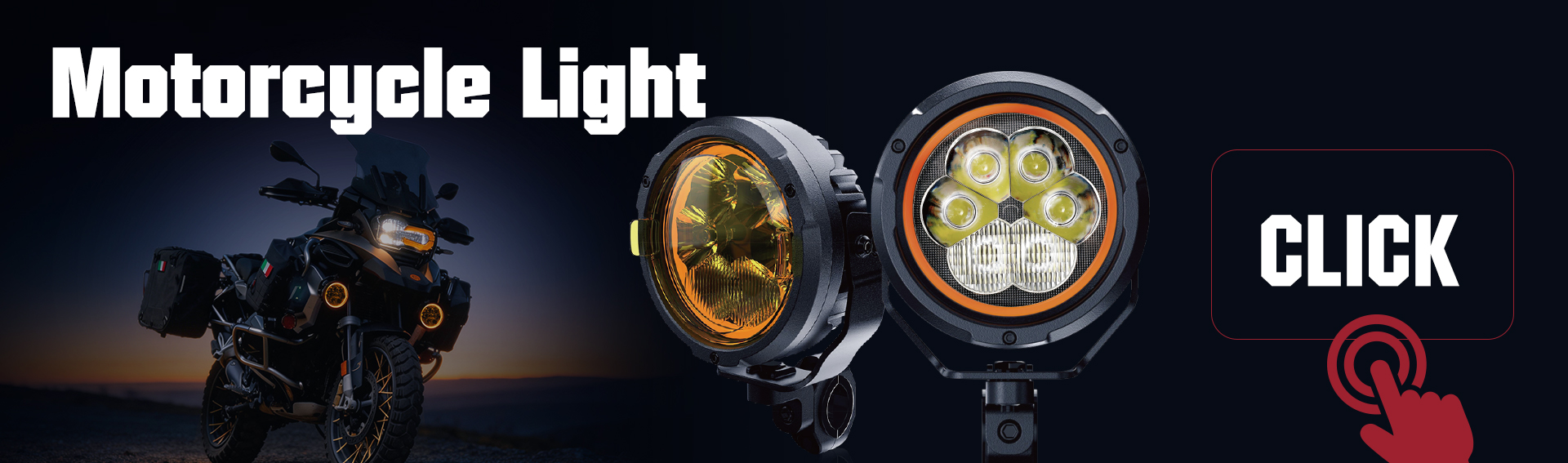
Motorcycle Headlights: Plug-and-play LED bulbs in H4, H7, HS1, and other motorcycle-specific bases, with advanced cooling and vibration damping.
-
Auxiliary Pods: Compact spot/flood lights for handlebar or crash-bar mounting, ideal for adventure touring.
-
Motorcycle Light Strips: Flexible accent strips for under-glow or fender lighting, adding both safety and custom style.
General Lighting Strips
-
Flexible LED Strips: Available in various lengths, colours, and waterproof ratings (IP65, IP67, IP68). Used for DRLs, underbody glow, interior accent, and even signage.
-
Rigid Light Bars: For more permanent mounting on grilles, bumpers, or roof racks.
4. Key Considerations When Choosing Lighting Products
Not all LED lights are created equal. Professional buyers and installers evaluate products based on several technical and practical criteria:
Luminous Output and Beam Pattern
Lumens are a measure of total light output, but lux (illuminance) and beam distance are equally important. A quality driving light should provide a focused, even beam that illuminates the road without scattering light into oncoming drivers' eyes. Look for lamps with precise optical design—either reflectors with multi-chip LEDs or projector lenses.
Thermal Management
Overheating is the primary cause of premature LED failure. Effective heat dissipation is achieved through:
-
Aluminium heat sinks with large surface areas
-
Copper core PCBs for rapid heat conduction
-
Active cooling fans (with dust/water protection) for high-output bulbs
-
Passive cooling designs for sealed work lights (fanless to enhance IP rating)
Environmental Durability
Exterior lights face rain, snow, mud, salt, and extreme temperatures. Verify the IP rating:
-
IP65: Dust-tight and protected against water jets
-
IP67: Dust-tight and capable of temporary immersion (1 metre for 30 minutes)
-
IP68: Dust-tight and suitable for continuous immersion beyond 1 metre
Electrical Compatibility
Modern vehicles use CANBUS networks to monitor bulb function. LED retrofits must include CANBUS decoders or load resistors to prevent error messages and hyper-flash for turn signals. Our bulbs are equipped with built-in drivers that handle these issues without additional wiring.
Certifications
For street-legal use, headlights and fog lights should meet DOT (US) or ECE (Europe) standards. While many aftermarket products are labelled "off-road only," we offer a range of DOT/ECE-compliant options for customers who require road legality.
5. The Aftermarket Opportunity: Why Upgrade?
Vehicle owners upgrade their lighting for multiple reasons:
-
Safety: Brighter, whiter light improves reaction times and reduces accident risk. Statistics show that vehicles with LED headlights have lower nighttime crash rates than those with halogen.
-
Aesthetics: Modern LED signatures enhance the vehicle's appearance, making it look newer and more premium.
-
Cost Savings: Although initial purchase price is higher, LEDs last years longer and consume less electricity, reducing replacement and fuel/electricity costs.
-
Resale Value: Well-maintained vehicles with quality aftermarket upgrades often command higher resale prices.
For fleets, the decision is even clearer: reduced downtime, fewer bulb replacements, and improved driver satisfaction translate directly to operational efficiency.
6. Why Partner with a Factory-Direct Manufacturer?
Choosing the right supplier is as important as choosing the right product. Our factory stands out in the competitive landscape due to several core strengths:
In-House R&D and Production
We design and manufacture our own LED chips, drivers, and housings, ensuring full control over quality and innovation. Our engineering team continuously tests new optical materials, thermal designs, and electronic circuits to improve performance and reliability.
Comprehensive Quality Assurance
Every product undergoes rigorous testing at multiple stages:
-
Photometric testing to verify lumen output and beam pattern
-
Thermal cycling to ensure stability from -40°C to +85°C
-
Vibration testing to simulate real-world road conditions
-
Waterproof testing to guarantee IP ratings
OEM/ODM Capabilities
We offer customisation services including:
-
Private labelling and branded packaging
-
Custom connector types and cable lengths
-
Specific colour temperatures or dual-colour options
-
Tailored beam patterns (spot, flood, combo) for driving lights
Global Supply Chain and Logistics
With warehouses and partner distribution centres in key regions, we ensure fast, insured delivery to North America, Europe, Australia, the Middle East, and beyond. We handle all necessary documentation for smooth customs clearance.
Competitive Factory-Direct Pricing
By eliminating intermediaries, we provide wholesale pricing that allows our distributors and partners to maintain healthy margins while offering end-users great value. Volume discounts are available for large-scale orders.
Responsive Technical Support
Our multilingual support team assists with installation queries, compatibility checks, and troubleshooting. We also provide comprehensive product manuals and video guides to facilitate DIY installations.
7. Looking Ahead: The Future of Automotive Lighting
The next decade will bring exciting advancements:
-
Adaptive Driving Beams (ADB): Using matrix LED or micro-LED arrays, ADB systems automatically shade out other vehicles while maintaining full high-beam illumination elsewhere, vastly improving safety.
-
OLED Tail Lamps: Ultra-thin, flexible OLED panels enable curved, animated light signatures that communicate vehicle status (e.g., emergency braking) more effectively.
-
Integration with ADAS: Lighting will become an integral part of advanced driver-assistance systems, with lights that project warnings onto the road or communicate with other vehicles via V2X.
-
Sustainable Materials: Manufacturers are increasingly using recyclable plastics and lead-free solders to reduce environmental impact.
Our factory is already investing in R&D for matrix LED prototypes and smart lighting controllers, ensuring that we remain at the forefront of these trends.
8. Conclusion: Illuminate Your Success with Our Lighting Solutions
The automotive lighting industry is dynamic, competitive, and full of opportunities. Whether you are a distributor, installer, fleet manager, or enthusiast, choosing the right products and the right manufacturing partner can make all the difference. Our comprehensive range—from headlights and driving lights to truck lamps, work lights, motorcycle LEDs, and flexible strips—covers every application with uncompromising quality.
We invite you to explore our catalogue, request samples, or discuss custom projects. With our factory-direct pricing, strict quality control, and dedicated support, we are committed to helping you light the way forward—safely, stylishly, and profitably.
2026 Off-Road & Heavy Equipment Lighting Market: Trends, Technology, and What Buyers Need to Know
Conquer the Night: Off-Road Lighting That Turns Darkness Into Day
Related Article
