
The Ultimate Guide to Driving Lights: Boost Your Nighttime Visibility and Off-Road Safety
Driving at night or on poorly lit roads presents significant challenges, even for experienced drivers. Reduced visibility, unpredictable obstacles, and adverse weather conditions can turn a routine journey into a risky endeavor. While standard headlights provide adequate illumination for city streets, they often fall short on highways, rural roads, or off-road trails. This is where high-performance driving lights become indispensable.
The global automotive auxiliary lighting market is expanding rapidly, driven by growing demand for enhanced safety and the rise of overlanding and off-road adventures. Whether you drive a pickup truck, an SUV, a heavy-duty truck, or an off-road buggy, adding dedicated driving lights can transform your night driving experience.
In this guide, we’ll explore everything you need to know about driving lights—from beam patterns and brightness to durability and installation—and why upgrading to professional-grade LED driving lights is a smart investment for any vehicle owner.
What Are Driving Lights and Why Do You Need Them?
Driving lights are auxiliary lights designed to supplement your vehicle’s high-beam headlights. Unlike fog lights, which cast a wide, low beam to cut through mist, driving lights project a narrow, focused beam that reaches far down the road. This long-range illumination allows you to spot hazards—such as animals, stalled vehicles, or debris—much earlier, giving you more time to react.
Key Benefits of Installing Driving Lights:
-
Extended Visibility: Quality driving lights can illuminate objects 500 meters or more ahead, far exceeding standard high beams.
-
Enhanced Nighttime Confidence: See more clearly on unlit highways, mountain passes, and desert roads.
-
Improved Off-Road Capability: Navigate trails, dunes, and forests after dark with confidence.
-
Complementary to Factory Headlights: Work alongside your existing lights without replacing them.
-
Durable and Weather-Resistant: Modern LED driving lights are sealed against water, dust, and vibration.
Types of Driving Lights Based on Beam Patterns
Choosing the right driving light depends on your typical driving conditions. Most driving lights fall into three beam pattern categories:
1. Spot Beam (Long Range)
Spot beams concentrate light into a tight, focused cone that reaches extreme distances. They are ideal for highway driving, open desert terrain, and any situation where you need to see far ahead. However, spot beams have a narrow width, so they may not illuminate the sides of the road effectively.
2. Flood Beam (Wide Angle)
Flood beams spread light over a broad area, illuminating the road shoulders, ditches, and immediate surroundings. They are excellent for low-speed off-road driving, winding trails, and work environments. Flood beams provide excellent peripheral awareness but lack long-distance reach.
3. Combo Beam (Best of Both Worlds)
Combo lights combine spot and flood optics in a single housing or pair. This delivers both long-range penetration and wide spread, making them the most versatile choice for mixed driving conditions—from highway cruising to trail crawling.
Driving Lights vs. Fog Lights vs. Work Lights – What’s the Difference?
Many drivers confuse these three types of auxiliary lights. Here’s a quick comparison:
| Type | Primary Use | Beam Shape | Typical Color Temperature |
|---|---|---|---|
| Driving Lights | Long-range high-speed illumination | Narrow, focused spot or combo | 5000K–6500K (cool white) |
| Fog Lights | Cutting through fog, rain, snow | Wide, flat cutoff beam | 2500K–3000K (amber/yellow) or 6000K white |
| Work Lights | Area lighting for stationary or slow-moving tasks | Wide flood, often 360° options | 4000K–5000K (neutral/cool) |
For most drivers, a pair of combo-beam driving lights paired with amber fog lights offers the ultimate all-weather lighting setup.
What to Look for in High-Quality Driving Lights
Not all driving lights are created equal. To ensure safety, durability, and performance, consider the following factors when selecting driving lights for your vehicle.
Lumens and Light Output
Lumen ratings indicate brightness. A single high-performance LED driving light can produce between 3,000 and 18,000 lumens. For street-legal use, choose lights with SAE or DOT compliance to ensure proper beam cutoff and avoid blinding oncoming traffic. For off-road use, higher lumens are acceptable but consider glare for other trail users.
Beam Distance (Meters/Feet)
Manufacturers often specify beam distance at 0.25 lux (moonlight level). Look for driving lights with a beam distance of 500 meters (1,640 feet) or more for serious long-range performance.
Durability and Environmental Protection
Driving lights face extreme conditions: rain, mud, salt, temperature swings, and constant vibration. Choose lights with:
-
Aluminum alloy housing for heat dissipation and impact resistance
-
Polycarbonate lens that is shatterproof and UV-resistant
-
IP rating – IP67 or IP68 (fully protected against dust and immersion in water)
-
Vibration-resistant mounting with stainless steel brackets
Color Temperature
Most LED driving lights offer a cool white color (6000K), which closely mimics daylight and reduces eye fatigue. Some premium models offer dual-color functionality (white + amber), allowing you to switch to amber in fog or snow.
Heat Dissipation
LEDs generate heat, and excessive heat shortens lifespan. Look for driving lights with advanced heat sink designs (honeycomb, finned aluminum) or fanless cooling systems that maintain waterproofing.
Compatibility and Installation
Driving lights can be mounted on bull bars, grilles, roof racks, or custom brackets. Most aftermarket driving lights come with universal mounting hardware and wiring harnesses with relays, switches, and fuses. Some premium models include plug-and-play harnesses for easy DIY installation.
Applications: Beyond Passenger Vehicles
Driving lights are not only for cars and SUVs. Their utility extends across multiple vehicle types:
Trucks and Commercial Vehicles
Long-haul truckers benefit enormously from driving lights. Poorly lit highways, wildlife crossings, and fatigue-related hazards demand maximum visibility. LED driving lights with combo beams help truck drivers see farther without adding excessive electrical load.
Off-Road and Overlanding Rigs
For adventure enthusiasts, driving lights are essential equipment. Whether you’re traversing the Australian Outback, the American Southwest, or African savannas, a set of powerful driving lights ensures you can continue driving safely after sunset.
Agricultural and Construction Equipment
Tractors, loaders, and other heavy machinery often operate in low-light conditions. Driving lights with wide flood beams improve visibility around equipment, preventing accidents and increasing productivity.
Motorcycles (Adventure and Touring)
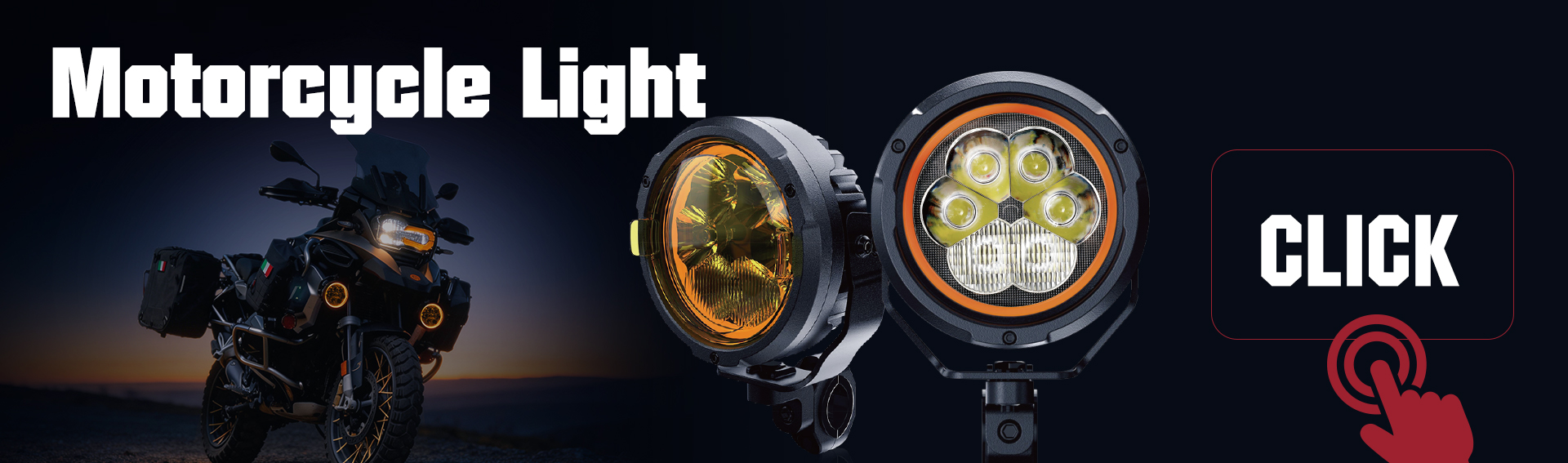
Some adventure motorcycles and touring bikes benefit from compact driving lights mounted on crash bars or fork legs. These auxiliary lights fill in the gap between the motorcycle’s headlight and the road ahead, especially at highway speeds.
Why Choose Our Factory as Your Driving Light Supplier?
As a specialized manufacturer of LED lighting solutions with years of experience in automotive, truck, motorcycle, and industrial lighting, we pride ourselves on delivering superior products at factory-direct prices. Our product portfolio includes:
-
LED Driving Lights – Spot, flood, and combo beams for cars, trucks, and SUVs
-
LED Work Lights – Rugged area lighting for machinery, trailers, and job sites
-
LED Light Bars – Single-row and dual-row bars for maximum output
-
Truck and Trailer Lights – Tail lights, marker lights, and clearance lights
-
Motorcycle LED Headlights – H4, H7, and custom fitments
-
LED Fog Lights – Dual-color white/amber options
-
LED Lamp Strips – Flexible accent and utility lighting
Our Manufacturing Advantages:
-
Factory-direct pricing – No distributor markups, volume discounts available
-
Rigorous quality control – Each unit tested before shipping
-
Customization (OEM/ODM) – Branding, packaging, and specification modifications
-
Fast global shipping – Reliable logistics partners ensure timely delivery
-
Technical support – Expert assistance with installation and compatibility
All our driving lights feature high-quality LED chips, premium aluminum housings, and IP67/IP68 waterproof ratings. We offer both standard and custom beam patterns, with options for color temperature and dual-color switching.
How to Install Driving Lights on Your Vehicle
Installation is straightforward with basic hand tools and a wiring harness. Most kits include:
-
Mounting brackets – Securely attach lights to your bumper, grille, or bull bar
-
Wiring harness – Includes relay, fuse, and switch
-
Instruction manual – Step-by-step guide
Basic steps:
-
Choose a sturdy mounting location
-
Install lights and brackets
-
Route wiring away from moving parts and exhaust
-
Connect to battery positive and negative (or an auxiliary fuse panel)
-
Mount the switch inside the cabin
-
Aim the lights (typically slightly downward and straight ahead)
For vehicles with CANBUS electrical systems, we can supply decoders or load resistors to prevent fault codes.
Conclusion: Light Up the Road Ahead
Driving lights are more than an accessory—they are a safety tool that can help prevent accidents and reduce driver fatigue. Whether you’re a daily commuter on dark country roads, an off-road enthusiast exploring remote trails, or a truck driver covering thousands of miles each week, investing in high-quality LED driving lights pays dividends in safety and peace of mind.
As a trusted manufacturer, we are committed to providing reliable, high-performance lighting solutions for every application. Browse our range of LED driving lights, work lights, and light bars today. Contact us for product samples, bulk quotes, or custom OEM projects.
Drive farther. See clearer. Arrive safer. Choose our driving lights.
Beyond Brightness: Engineering the Future of Off-Road Illumination
Premium Off-Road & Truck LED Lighting Solutions Direct From Professional Manufacturer
Related Article
